Concrete sidewalk building in Norfolk NE - a walk that holds up through winter
Sunken, cracked or flaking walk, or a muddy path where one should be? We build a new concrete sidewalk that drains and sits level.
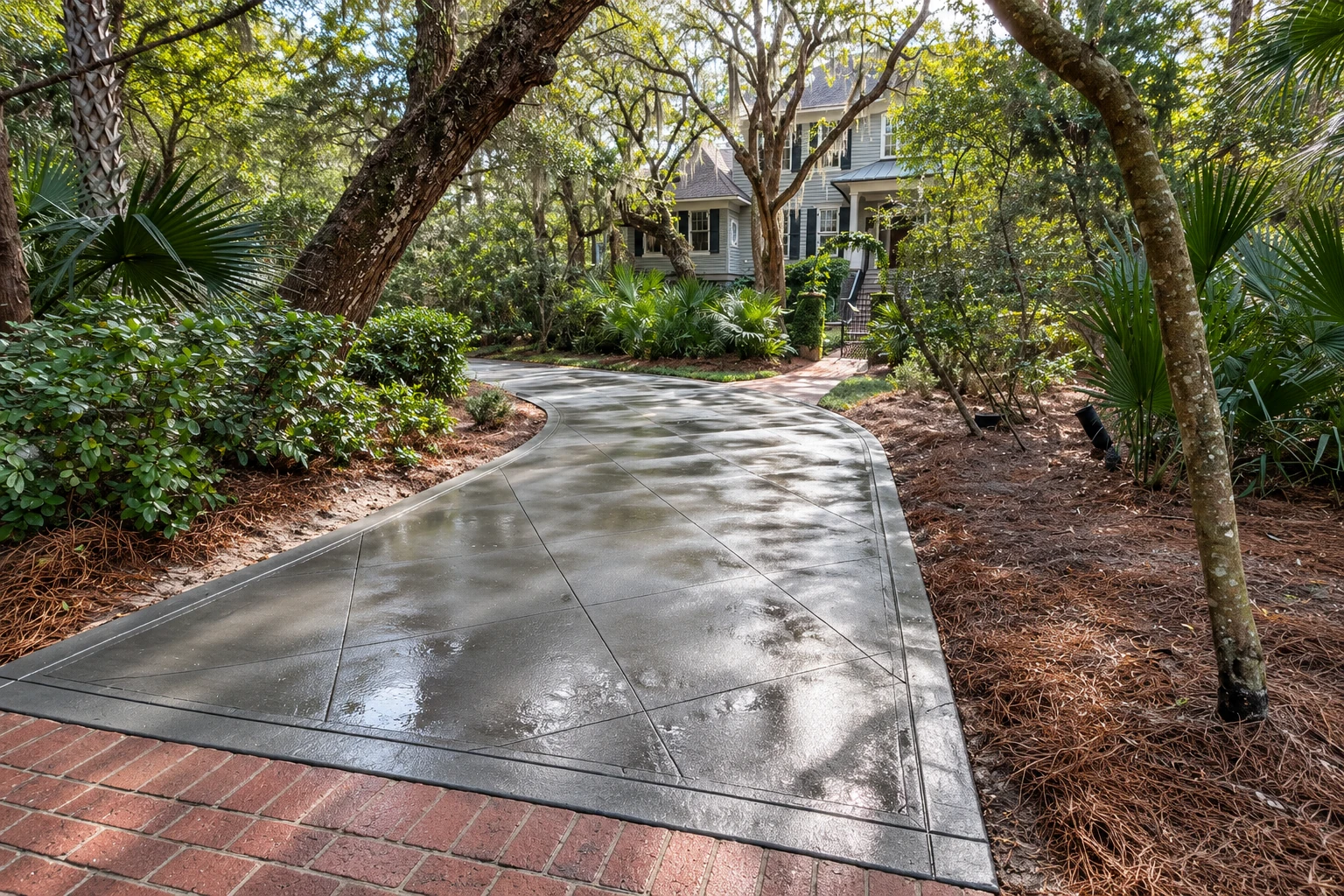
Dig-out and base
We dig to firm ground and pack the base.
Slope for drainage
Each walk is pitched so rain runs off it.
Broom finish
A light brushed texture so your shoes grip when wet.
Joints and curing
Joints cut on time, and the slab given time to harden.
What does building a concrete sidewalk in Norfolk involve?
Concrete sidewalk building in Norfolk means digging out, packing a firm base and pouring a flat outdoor slab sloped so water runs off, so you get a walk that stays even and keeps its surface through freeze and thaw.
In this climate the mix and the timing matter as much as the finish. Air-entrained concrete has tiny bubbles spread through it that give freezing water room to push, and without them freeze and thaw flake the top of a walk however carefully it was finished. Concrete that freezes before it's strong is damaged for good, so the pour waits for warm enough days.
At Norfolk Concrete Company, price mostly follows the walk's length and width, how deep we dig to reach firm ground, whether an old walk comes out first and how close a truck can get. The schedule turns on the weather and the ground. The estimate I write lists each step and what's included, so you see your own number before anything starts.
- A base dug and packed firm
- A slope that sends water off
- Joints cut where cracks belong
- Plain advice for the first winter
How do you know it's time for a new sidewalk?
If your walk trips people, holds water or is flaking apart, it's usually time to look at what's under it, not just the top.
Sections sinking or heaving
When one slab drops or lifts, the edge catches toes and mower wheels, and the base under it has usually settled or shifted.
Cracks running every which way
Random cracks usually mean the control joints, grooves that give concrete a planned place to crack, were cut late or skipped.
A flaking, pitted surface
When the top peels off in thin flakes, freeze and thaw got into it, often helped along by salt or water that sat.
Puddles that sit after rain
A low spot that holds water keeps that part of the slab soaked, and soaked concrete wears faster through our winters.
A walk that tips toward the house
If water runs off the walk toward your foundation, the slope is backward, and patching the top won't change where it goes.
No walk where you need one
A path worn across the lawn, or a patio or garage you reach through mud, is a good reason to pour one.
Get an estimate for your walk
Tell us roughly how long and wide the walk is and where it runs. We reply within one business day, and the on-site quote is free, no obligation.
What I look at before quoting a sidewalk
Before I recommend anything, I walk the route with you and look at the ground, the water and what the new walk has to meet.
The ground underneath
The subgrade, the dirt the slab sits on, has to be firm, so I look for soft fill, roots and old base that needs digging out.
Which way water runs
I look hard at where water will run, because a slab that stays wet wears faster, and the walk needs a slope that sheds it.
Where it meets the rest
Where the walk meets the driveway, the steps or a garage floor, the heights have to line up so nobody trips at the seam.
How a sidewalk job runs from call to walk-through
You'll know who's coming, what's being done and why at each step, and we plan the pour around the weather and your schedule.
You get in touch
Call (402) 844-1238 or send the form with the walk's rough length, width and where it runs on your lot.
I come out
I walk the route with you, ask what you want from it and check the ground and drainage myself.
Your written estimate
You get an estimate that lists each step and what's included, so you can read it line by line.
We do the work
Our crew digs out, packs the base, forms and pours, cuts the joints, then lets it cure, the wait while it hardens before use.
We walk it together
We walk the finished job with you and go over how to look after it through its first winter.
Why Norfolk homeowners call Norfolk Concrete Company for sidewalks
I ran lawn care and snow removal in Norfolk for years before learning concrete on a finishing crew, then started this business in 2023, so I know how frost and water treat a walk.
The owner writes your estimate
I come out, look at the walk and write the estimate myself, so you hear the plan from the person responsible for it.
Our own crew, with me on it
The people pouring your walk are our own crew, and I'm on the job with them from dig-out to finish.
Fully licensed and insured
We're fully licensed and insured, and you're welcome to ask about our coverage before you sign anything.
Satisfaction guaranteed on every job
My old business taught me a returned call and clear paperwork matter as much as the work. Call (402) 844-1238 to set up a visit.
Concrete sidewalk building in Norfolk and Wayne
Nebraska requires a contractor to be registered with the state before doing any construction work here. The Nebraska Department of Labor takes a contractor off its list of registered contractors when their insurance expires, and it says plainly that registration doesn't ensure quality or protect against fraud, so ask about the base and the drainage too.
Around Norfolk and Wayne, the walks we're called to replace usually failed from underneath or from water. We see sections that heaved or sank over a few winters, low spots that hold puddles and tops flaking where salt went down. A new walk has to answer all three, which is why the base and the slope get most of my attention.
Need a new walk or a sunken one replaced?
(402) 844-1238Sidewalk questions we hear most
How much does a concrete sidewalk cost in Norfolk, NE?
Installing a concrete sidewalk usually costs about $12 to $14.70 per square foot across the US, which is a national figure, not our price. Your walk's number moves with its size, how much digging the base needs and whether an old walk comes out first. I'll measure on site and put each step on the written estimate.
Can concrete be poured in cold weather in Nebraska?
Yes, but only on thawed ground and in a stretch that stays warm enough for the concrete to gain strength. At 50°F or above, concrete typically gets strong enough in about 48 hours, so we plan the pour for days that hold that warm. Concrete placed on frozen ground is likely to settle unevenly and crack after the thaw, so we wait for the ground to thaw first.
How do I keep a new concrete sidewalk from flaking?
Use sand instead of deicing salt for grip during the walk's first winter, and keep water running off it rather than sitting on it. After that, trade guidance suggests cleaning the walk and reapplying a penetrating sealer every 3 to 5 years, following the sealer maker's instructions. I'll go over this with you when the job's done.
How do I stop a new sidewalk from cracking?
Concrete moves as it dries and through the seasons, so the aim is to choose where it cracks and keep the ground under it from shifting. We cut the control joints on time so cracks follow those lines, and we dig to firm ground so the slabs have solid footing.
What is the best way to build a sidewalk that won't sink?
Dig out to firm ground and pack the base before any concrete goes in, because a walk set on raked dirt settles along with that dirt. The base is hidden on day one and it's the first thing a tight budget wants to cut, but it's the last place I'd save. I'd rather pour a plain broom finish on a good base, and decorative concrete only pays off on a base that stays put.
What should I ask a concrete contractor before hiring one in Nebraska?
Ask whether they're registered with the state and whether their workers' compensation certificate is current. Nebraska contractors with one or more employees keep that certificate on file with the Department of Labor, and the state counts anyone working on property that isn't their own as a contractor, so the rule covers whoever pours your walk.
Ask Norfolk Concrete Company about your walk
Call or send the form now, so we can look at the route before the ground freezes and plan your pour for the first warm stretch.